The First Three Jobs I Give AI in Any Company
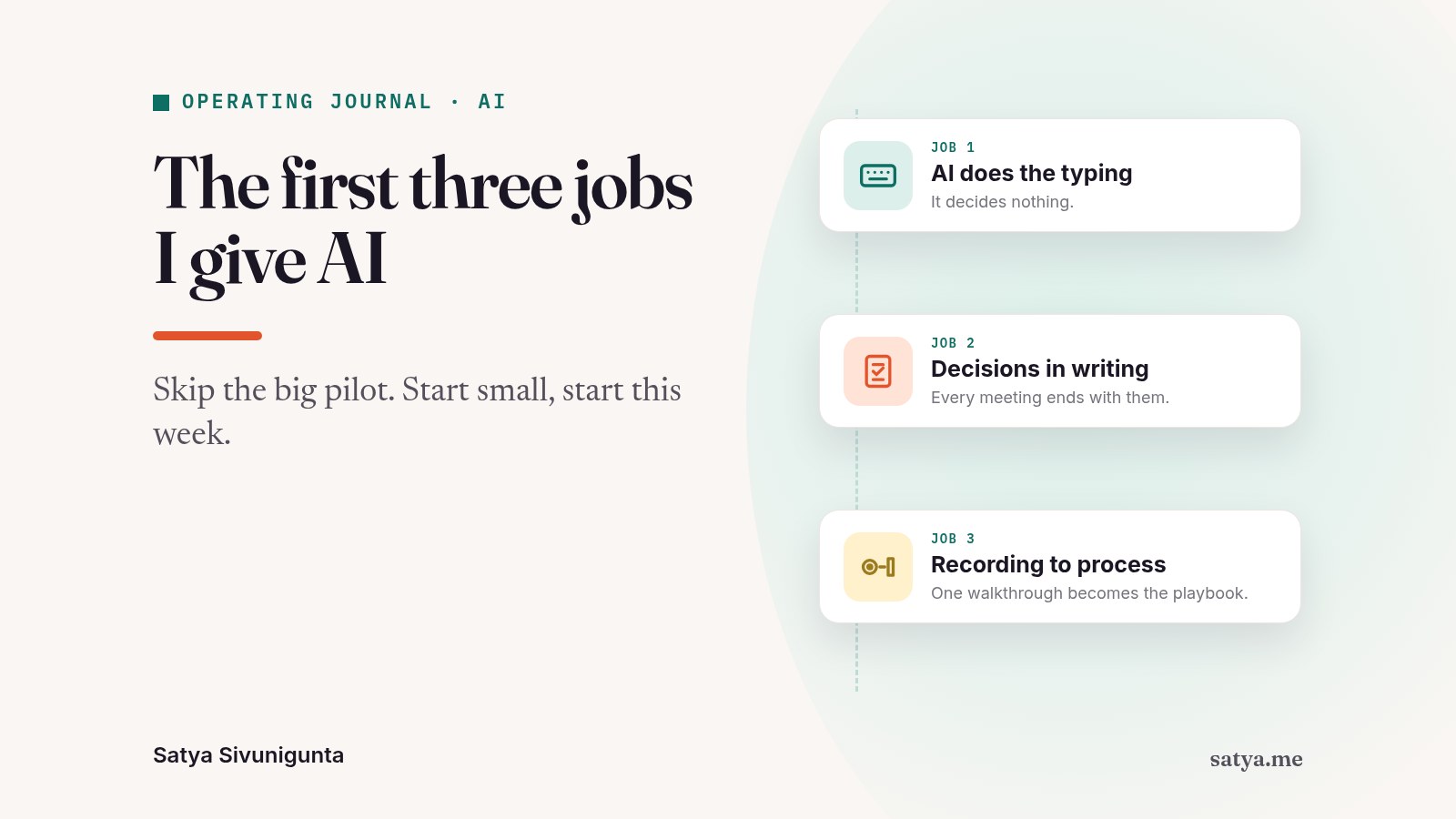
Most teams start AI with a big pilot. I start with three small jobs: AI does the typing, meetings end in written decisions, and one recording becomes a process.
Most companies start their AI journey with a big pilot.
A chatbot for customers. A forecasting model. A custom tool that takes six months to build. Many of these never reach real work. I wrote about why in why 95% of enterprise AI pilots fail.
I start somewhere much smaller. In any company I build with, AI gets three jobs first. None of them is exciting. All of them pay back in the first week.
Key takeaways
- Job one: AI does the typing. It decides nothing. Prices, people, and promises stay with a person.
- Job two: every meeting ends with decisions in writing. Owner, date, done.
- Job three: one recording becomes a process. Record a task once, and AI turns it into a checklist anyone can run.
- Start small, keep a person accountable, and make AI show its sources.
Why start AI with small jobs instead of a big project?
Small jobs build trust and habits fast, with low risk. Big projects need clean data, budget, and patience that most teams do not have yet.
I am not alone in seeing this. In the Federal Reserve's 2026 Report on Employer Firms, 46% of small employer firms said they use AI. But only 7% of those users had fully built it into their business. About half were still experimenting. The most common use was writing or marketing, at 83%. The top challenge for users was accuracy, at 46%.
Read those numbers together. People are using AI. They are using it mostly to write. And they do not fully trust what comes back.
My three jobs are built around exactly that. Use AI where it is strong. Keep a person where trust matters.
Job one: what does "AI does the typing, it decides nothing" mean?
It means AI does the work of producing words and numbers, and a person makes every call. Drafts, data pulls, sorting, summaries, reminders. That is the typing.
I made a short video about this rule: AI does all my typing. It decides nothing.
Here is how the line works in practice.
AI can draft the email to a supplier. I decide whether to send it.
AI can pull last week's sales by product and sort them. I decide which product to cut.
AI can summarize forty customer reviews. I decide what we change.
Three things never leave a human: prices, people, and promises. Pricing changes how customers trust you. People decisions change lives. Promises to customers are the brand. None of these should be made by a tool that cannot be held accountable.
There is one more rule that makes this job safe. AI has to show its work. Every number must point back to a source, a cell in a sheet or a line in a report. If it cannot prove a number, it should say so, not guess. I built my own small AI team around that rule. You can see it in my AI exec team has to show its work.
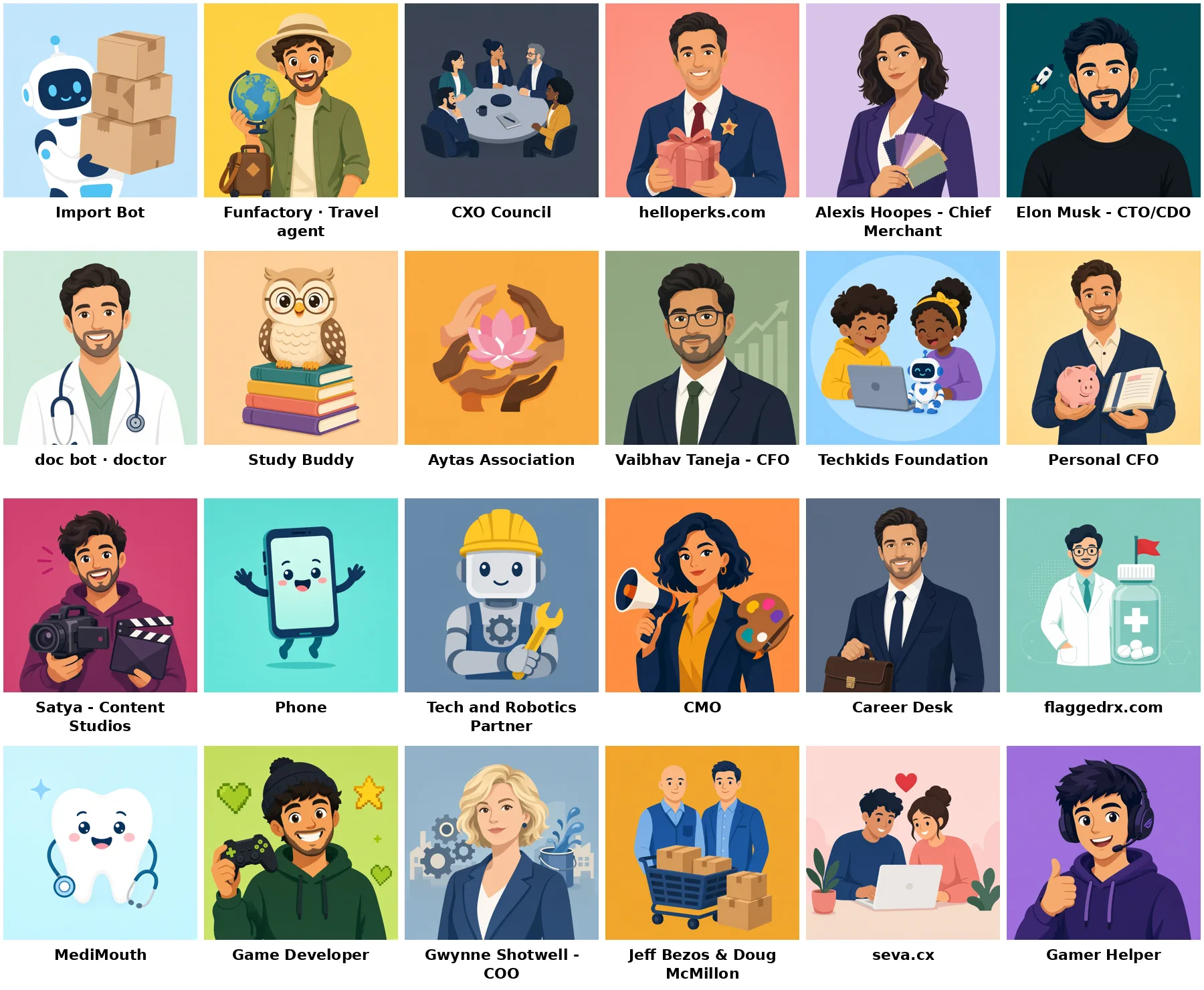 My AI team. Each helper does the typing and shows its sources. The final yes stays with me.
When people start this way, something good happens. They stop being afraid of AI, because they can see it is a helper, not a boss. And they get hours back every week.
Job two: how do you make every meeting end with decisions in writing?
Record or transcribe the meeting. Then ask AI to pull out every decision, with an owner and a date. Share it before the day ends.
This one changed how my teams run more than anything else. I explain the prompt in every meeting ends with decisions in writing.
The output has four parts:
- Decisions. What we agreed. Who owns it. When it is done.
- Open questions. What we still need to know, and who will find out.
- Risks. Named out loud, so no one can say later that they did not know.
- Decided by nobody. Things everyone talked about, but no one actually owns.
That last list is my favorite. Most meetings have one or two items like that. Everyone leaves thinking someone else will handle it. Nobody does. A week later, the same topic comes back, and the meeting starts over.
Writing it down is a form of satya, of truth. A decision that only lives in memory turns into five different memories. A decision in writing has one version.
This also speeds everything up. I believe a team should decide in days, not weeks. Written decisions are how you keep that pace without chaos.
Job three: how does one recording become a process?
One person does the task once while talking out loud, and records it. AI turns the transcript into a numbered checklist with steps, edge cases, what to do if it breaks, and who owns it.
A process that lives in one head is not a process. It is a risk.
Every company has these. The person who knows how to close the month. The person who knows how to fix the shipping label error. The person who knows which supplier to call when a container is late. When that person is sick, on vacation, or gone, the work stops.
The old fix was to ask them to write a manual. They never had time. The manual was always out of date.
The new fix takes one recording. Talk through the task the next time you do it. Feed the transcript to AI. Ask for:
- The steps, numbered.
- The edge cases you mentioned along the way.
- An "if it breaks" section.
- One owner for the checklist.
Then the person who knows the task reads it and fixes what is wrong. That review is the important part. AI drafts. The expert approves.
Over a few months, you build a library. A new person joins, and you hand them the library, not a shadow schedule where they follow someone around for two weeks. There is a short on this: one recording becomes a process.
Why do these three jobs work better than a big AI pilot?
They work because they fix how a company runs, not just one task. Typing gives time back. Written decisions give clarity. Recorded processes give resilience.
They also share three rules:
- A person stays accountable. AI never owns a decision or a promise.
- Sources are visible. Numbers point to a cell. Decisions point to a meeting.
- The habit comes before the tool. You can switch AI tools any time. The habits stay.
This is the same idea I talk about in how AI makes me a 10x operator. The gain does not come from a smarter model. It comes from a better operation around the model.
What should a team do this week?
Pick one job. Not all three.
If your team drowns in email and reports, start with typing. If your meetings repeat themselves, start with written decisions. If one person is a single point of failure, start with a recording.
Run it for two weeks. Then add the next one.
There is a quiet kind of seva in this work. You are not building something flashy. You are giving people their time back and making sure no one is the only person who knows how to do the job.
FAQ
What is the best first use of AI in a small company? Start with typing work, such as drafts, data pulls, summaries, and reminders. Keep every decision with a person. It saves time on day one and carries little risk.
How do you use AI to capture meeting decisions? Record or transcribe the meeting, then ask AI to list each decision with an owner and a date, plus open questions and anything decided by nobody. Share it the same day.
Can AI write standard operating procedures? Yes. Record one person doing a task while they talk out loud. AI turns the transcript into a numbered checklist with steps, edge cases, what to do if it breaks, and an owner.
What should AI not do in a business? AI should not make decisions about prices, people, or promises to customers. It can prepare the facts. A named person decides and owns the result.
One question for you
Which of these three jobs would save your team the most time next week? And which process in your company still lives in one person's head?
Work with me
An operator's honest read for founders, owners, and CEOs. One sharp session, a full diagnosis, or a fractional seat.