Field notes on building the system
Essays on capital allocation, commerce, and the long road from product designer to operator. Truth with care.

EBITDA is a moral document
We doubled EBITDA from 10% to over 20% in three years. The work was not financial. It was the decision to say no to a hundred things that did not earn their oxygen.
View →
Amazon and Walmart are not retailers anymore. They are ad companies.
Walmart and Amazon now make more money selling access to customers than selling to them. A retail CEO who sat on both sides explains the retail media tax.
The Comfort Food Trap
Six weeks into the CEO seat I was rewriting product copy at 11pm. The work that earns you the title is the work that can cost you the first year.
Amazon is not a channel. It is a company living in your margin
Why Allbirds, Solo Stove, Outdoor Voices, Casper, and Saks Global all collapsed inside the same 24-month window, and what it says about Amazon seller margins.

One brand, three surfaces
The customer stopped separating the store from the screen long before the companies did. The strongest consumer brands now run one brand across three surfaces.
The vibe coding trap: why taste is the only skill that doesn't commoditize
Why taste, not tooling, is the skill that survives the AI coding era.
Why 95% of enterprise AI pilots fail... and the 5% that don't
MIT's 95% failure number is a process readiness problem, not an AI problem. The winners will have the cleanest operating systems, not the biggest models.

Every company has two communication architectures: a response to Ben Horowitz
Ben Horowitz is right that designing the communication architecture is the CEO's most important operational job. He leaves out that every company has two, and the deeper job is keeping them aligned.
Inherited problems are still your problems
A class action surfaced from a practice that predated me by years. The day you sign the offer, every legacy issue becomes yours.

What I learned watching three companies go bankrupt
Art Van, JCPenney, and Conn’s. Three categories, three decades, one pattern: leveraged capital structures colliding with cyclical consumer demand.

Care without truth is sentimentality: a response to Ben Horowitz on taking care of people
Ben Horowitz says people, products, profits, in that order. He is right. He also leaves out the layer underneath the first one.

The China supply chain in 2026: what I see that nobody is talking about
Twenty-five years across footwear, mass retail private label, custom home goods, and leather goods. The trade press is missing six shifts already reshaping every China-sourced category.
Hire people who scare you: the first-time CEO's hardest move
Most first-time CEOs hire who they like. The job is to hire who they need. A retrospective on the moment my company started compounding.

The day the craft has to end: what no one tells first-time CEOs
Twenty years of design craft did not prepare me for the CEO seat. They prepared me for the seat I had to leave behind.
The board is leverage, not oversight
First-time CEOs treat the board like a parent with a report card. The board is actually the most concentrated network and capital in the building.
Decide in days, not weeks: why first-time CEOs die of paralysis
Most CEO decisions are reversible. The cost of being wrong fast is almost always less than the cost of being right slow.

I gave AI my lab results, my prescriptions, and 30 supplements. What it told me no doctor ever had.
I handed an AI my real health data and asked it to audit my supplement stack. What came back changed how I think about where the opportunity in AI really is.

What it would take to make eyewear iconic
A POV piece, not a retrospective. Written the week I applied for a job in a category nobody has cracked yet.
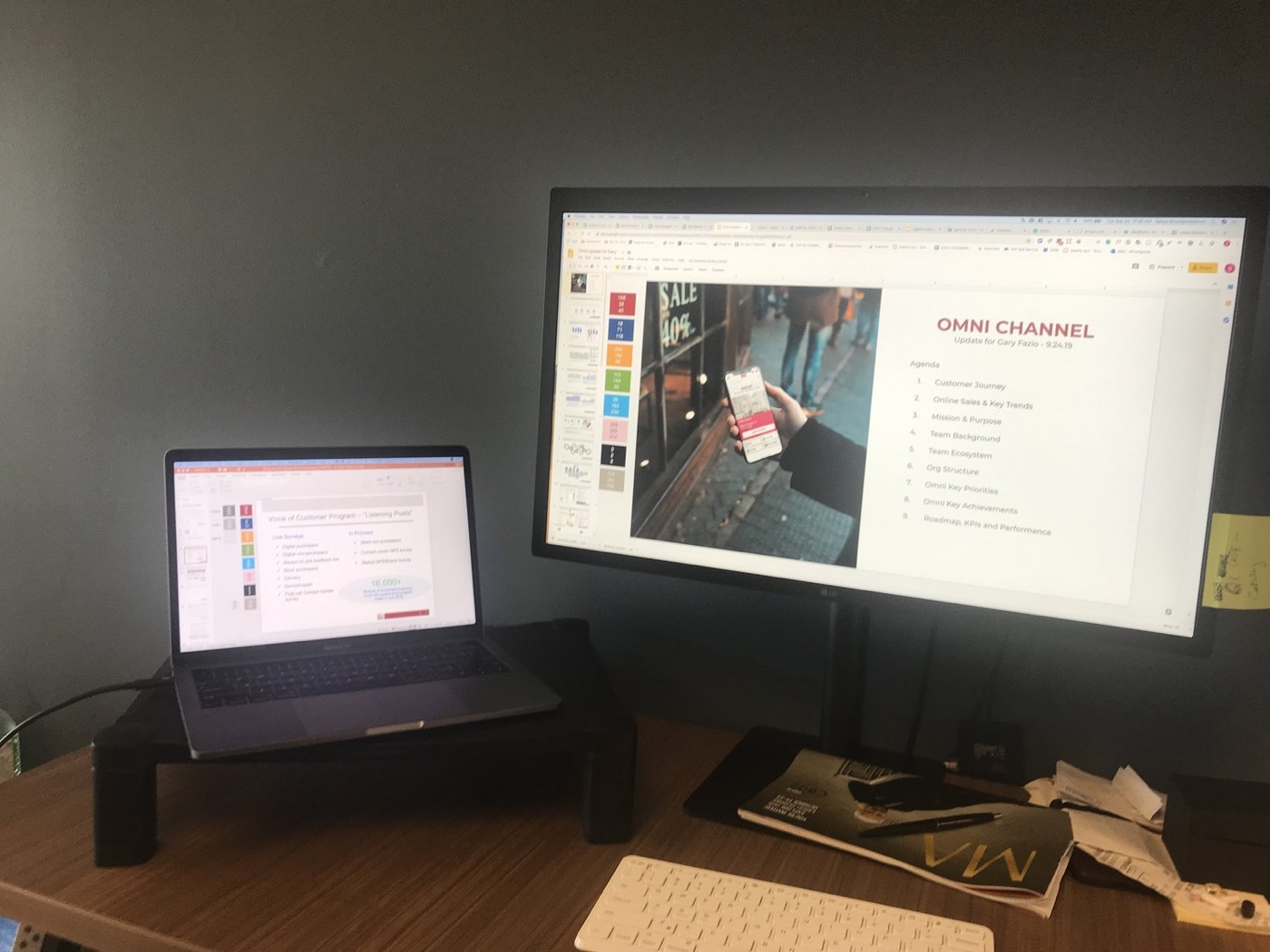
Loyalty is not a program. It's an operating system.
For thirty years, retailers have called their loyalty work programs. That word is the problem, and that model is dead even if its budget is still funded.

The moment I stopped thinking like a designer
A VP's question at Nike pulled my eye off the interface and onto the system that had to sustain it.

What I misunderstood about scale
By 2004 Nike's digital commerce platform was live, and I confused building it with scaling it. They are not the same discipline.

When alignment is the real bottleneck
We blame speed, resources, and competition. But most companies stall because the people in the room cannot agree on what they are building.

Architecture decisions that outlive teams
The code you write today will be maintained by people you will never meet. Choose accordingly.
Channel conflict and the politics of direct-to-consumer
In 2003, selling direct was an act of rebellion inside a wholesale company. The lesson: economics always wins arguments.
Influence without authority
For the first decade of my career I owned nothing: no P&L, no headcount budget, no final say. But I learned how to move things anyway.

Designing for behavior before 'growth' existed
Before growth teams, before funnels, before A/B testing at scale, there was just watching how people actually used the thing you built.

Why early ecommerce failed (and what survived)
Between 2000 and 2006 most digital commerce initiatives died. The ones that survived shared patterns I did not recognize until years later.

9/11 and leading through uncertainty
Twenty-five years ago, the world changed overnight. I was at Nike, building something unproven, when uncertainty became the only constant.

Building commerce in a post-dot-com world
Joining Nike's early ecommerce efforts when the question wasn't how fast to grow, but whether direct digital commerce deserved to exist at all.